Confined space retrieval systems: choosing a tripod, davit, winch and SRL-R
M Squared Safety supplies confined space equipment for tanks, vaults, manholes, silos, pits and sewers. Tripods, davits, personnel winches, retrieval SRLs, rescue kits and gas detection. Buy outright or rent for a single entry or a shutdown. Call 949-954-6581.
We write confined space entry programs and train crews as well as supplying the hardware, so if you are working out what a specific space actually requires, that conversation comes with the order. What the standard requires of the retrieval and rescue side, from 1910.146(k)(3) to evaluating a rescue service under (k)(1), is set out in confined space rescue and retrieval equipment: what the standard requires. This page is about choosing the hardware.
Four questions that pick the system for you
-
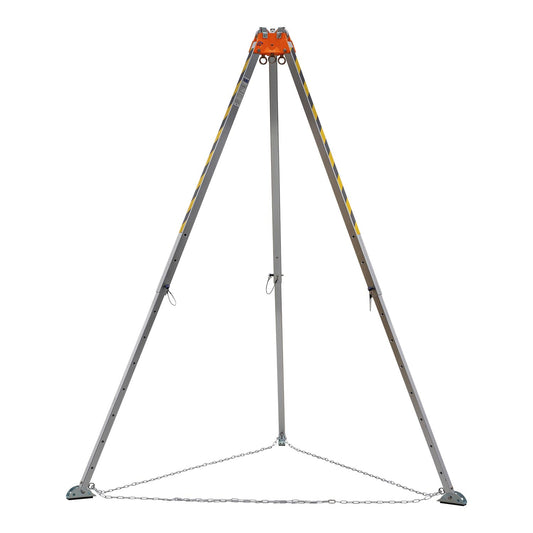
How deep is the space? The retrieval line has to reach the bottom of the space with length to spare for where the entrant will actually work. We carry complete tripod, winch and SRL-R systems in 60 ft and 115 ft configurations. Measure before you order, and measure the deepest point, not the opening.
-
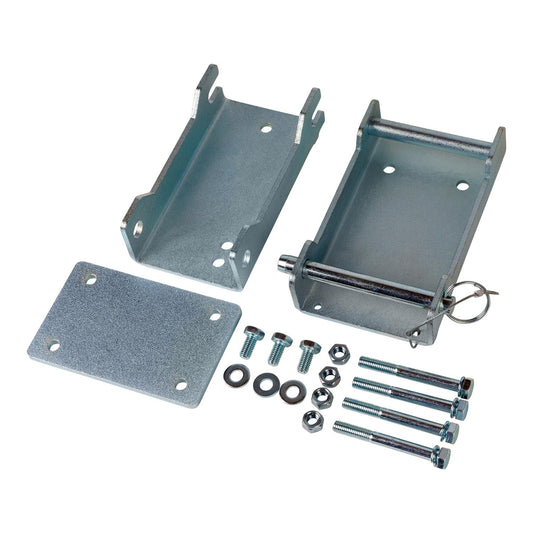
Can you straddle the opening? A tripod needs its legs set around the opening on stable, level footing. On a tank top edge, beside a wall, or over an opening you cannot surround, a davit arm on a base or socket puts the anchor over the hole from one side. If the entry is through a side manway rather than from above, the mechanical device requirement changes, which is covered below.
-
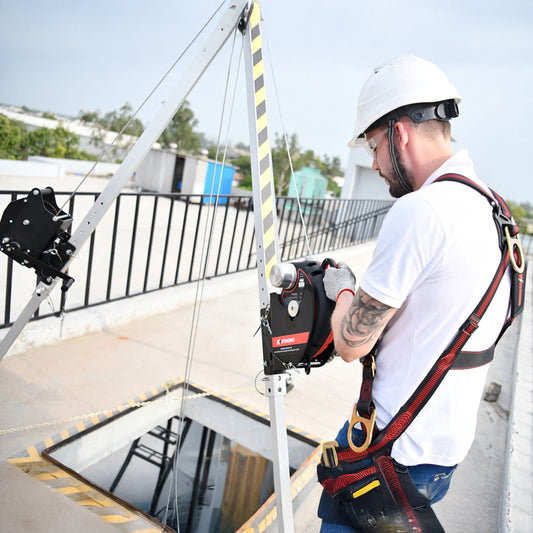
Winch, SRL-R, or both? A personnel-rated winch gives controlled raising and lowering for entry and for non-entry rescue. A retrieval SRL, an SRL-R, gives fall arrest during entry plus an integral retrieval capability. Most crews working vertical spaces end up with a tripod, a winch and an SRL-R rather than choosing between them.
-
How will you test the atmosphere before entry? The pre-entry test has to be taken before anyone crosses the opening, which means drawing the sample from outside the space with a pumped instrument and a probe. A diffusion monitor worn on the body is the right tool during the work and the wrong tool for the pre-entry test. See the pumped Senko SP-MGTP, the Senko MGT four gas monitor, and gas monitoring for confined space entry.
What a permit space entry usually needs
Under OSHA 29 CFR 1910.146 for general industry, and 29 CFR 1926 Subpart AA for construction, a permit-required confined space entry generally calls for four things working together.
-
Atmospheric testing. The space is tested before entry and monitored during it, for oxygen, flammable gases and vapors, and toxic contaminants, in that order.
-
A retrieval system. 1910.146(k)(3) requires retrieval systems whenever an authorized entrant enters a permit space, unless the equipment would increase the overall risk or would not help the rescue.
-
A full body harness with the retrieval line attached at the center of the back near shoulder level, above the head, or at another point the equipment allows for a safer extraction.
-
A mechanical retrieval device available for vertical permit spaces deeper than five feet, per 1910.146(k)(3)(ii).
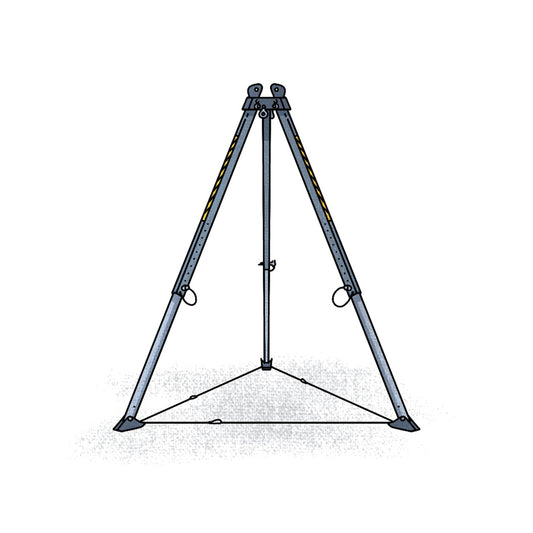
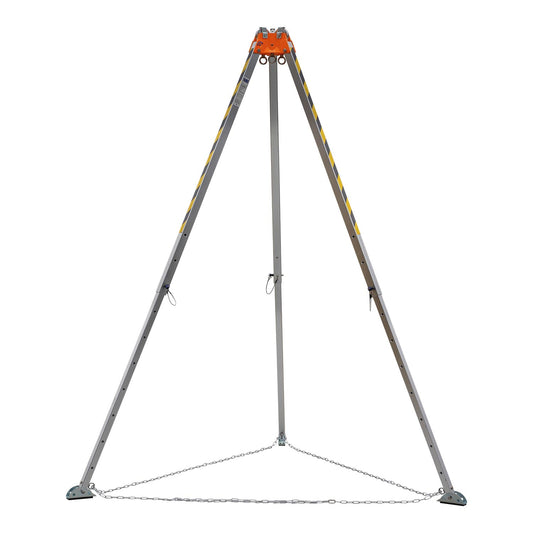
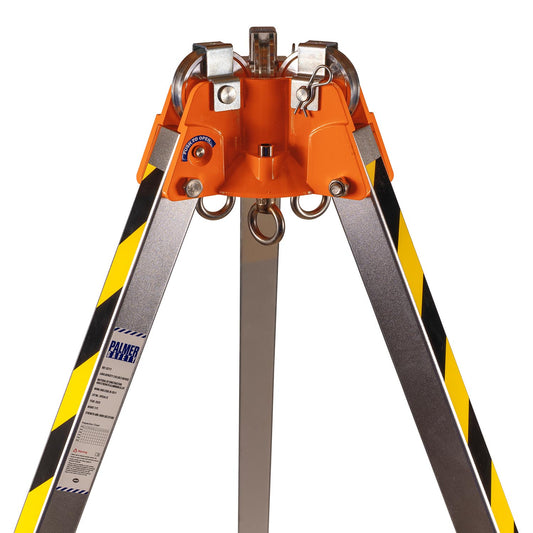
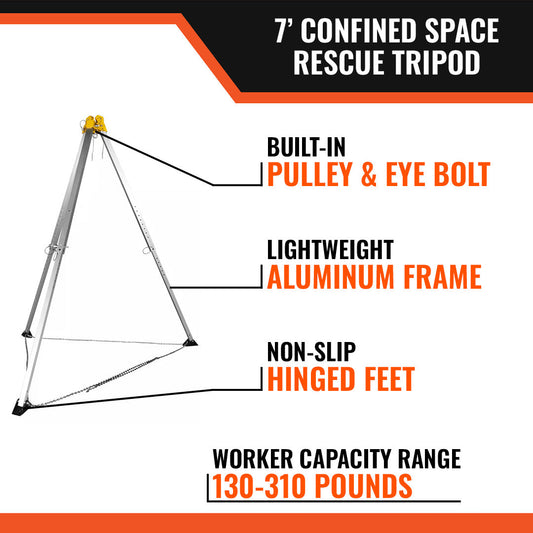
That last point is why a tripod on its own is rarely the whole answer. For a vertical space over five feet you need the mast and the mechanical means of raising a person.
Confined space hoists and winches
A confined space winch or hoist is the mechanical device that satisfies the five foot rule. Personnel-rated units are not the same as material handling winches, and a material winch is not a substitute. Check the rating before it goes on a tripod that a person will be attached to.
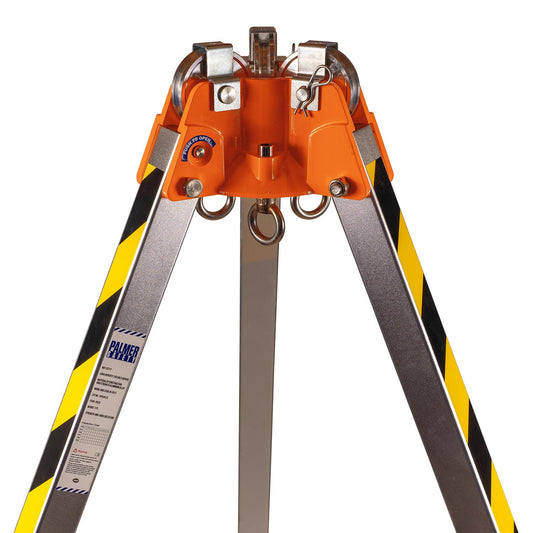
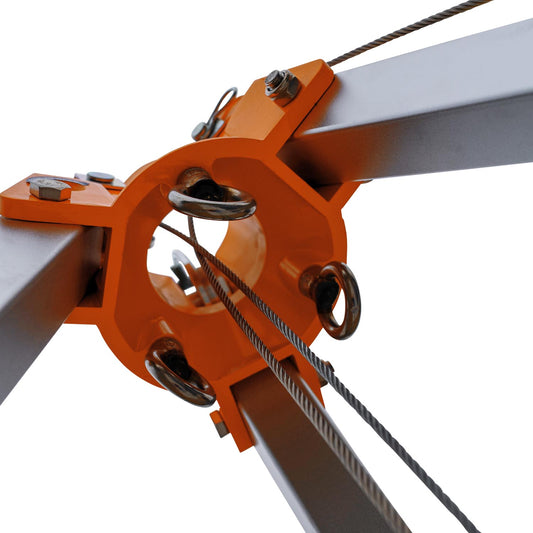
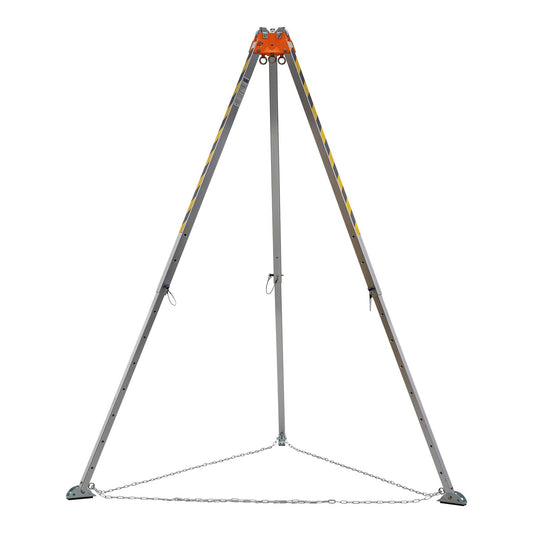
We carry complete tripod, winch and SRL-R systems in 60 ft and 115 ft configurations, tripod and winch systems, tripod and SRL-R systems, and standalone 7 ft tripods from Malta Dynamics and Palmer Safety.
Attics, crawl spaces and residential work
Not every confined space is a tank or a manhole. OSHA has published extensive guidance on attics, crawl spaces and basements in residential work, and the answer changes house to house depending on how the space is accessed and how hot it is on the day. If your crews service equipment in those spaces, see safety and OSHA compliance for residential HVAC contractors, which covers when an attic is a confined space, when it becomes permit-required, and which of the two confined space standards applies to a given job.
Renting instead of buying
For a one-off vessel entry, an annual shutdown or a job where the equipment sits idle the rest of the year, renting is usually the better economics. Our fall protection and confined space rental fleet includes the KStrong Megapod portable tripod and Senko gas detection, the MGT four gas monitor and the SGT single gas monitor, with rates on the rental rate sheet.
Common questions
What is a confined space?
Three things, all of which have to be true under 29 CFR 1910.146. The space is large enough and so configured that an employee can bodily enter and perform assigned work. It has limited or restricted means for entry or exit. And it is not designed for continuous employee occupancy. Note what is not on that list: depth, darkness, or how unpleasant it is. A wide shallow pit can qualify; an ordinary basement usually does not.
What is a permit required confined space?
A confined space with one or more of four characteristics. It contains or has the potential to contain a hazardous atmosphere. It contains a material that has the potential for engulfing an entrant. It has an internal configuration such that an entrant could be trapped or asphyxiated by inwardly converging walls or a floor that slopes downward and tapers to a smaller cross-section. Or it contains any other recognized serious safety or health hazard. One is enough, and the last one is broad on purpose.
In what order do you test the atmosphere?
Oxygen first, then combustible gases and vapors, then toxic gases and vapors. That order is specified, not a convention. The readings depend on each other: combustible gas sensors need oxygen to read correctly, so a low-oxygen atmosphere will under-report flammable gas and tell you a space is safe when it is not. Testing out of order can produce a permit that is confidently wrong.
Can we enter a permit space without a full permit?
Sometimes, under the alternate procedures at 29 CFR 1910.146(c)(5), but the bar is specific. The employer has to demonstrate that the only hazard is an actual or potential hazardous atmosphere, that continuous forced air ventilation alone is sufficient to keep the space safe for entry, and that there is monitoring and inspection data supporting those determinations. The data has to come from somewhere, and initial entries made to gather it still follow the full permit process. Alternate procedures are a conclusion you earn, not an assumption you start from.
Should the attendant go in after a downed entrant?
No. A large share of confined space fatalities are would-be rescuers who entered without protection because someone was down and the atmosphere looked fine. The standard is built around non-entry rescue for exactly that reason: retrieval line and mechanical device first, so the attendant recovers the entrant from outside the space. The attendant's job is to stay out, monitor and summon rescue. If the plan depends on the attendant entering, it is not a plan.
What equipment is required for a confined space entry?
Generally atmospheric testing, a retrieval system, a full body harness with the retrieval line attached at the back near shoulder level or above the head, and for vertical spaces deeper than five feet a mechanical retrieval device such as a tripod and winch.
Do I need a tripod for every confined space?
No. The mechanical device requirement at 1910.146(k)(3)(ii) applies to vertical type permit spaces more than five feet deep. Horizontal entries such as a side manway may be handled differently, but the retrieval system requirement still applies.
Should I use a tripod or a davit?
A tripod when you can set its legs around the opening on stable footing. A davit arm on a base or socket when you cannot surround the opening, such as at the edge of a tank top or beside a wall.
Can I use a material handling winch for personnel?
No. A winch used to raise or lower a person must be rated for personnel. A material handling winch is not a substitute, and the rating should be confirmed before it goes on a tripod a worker is attached to.
Can I rent confined space equipment instead of buying it?
Yes. For a one-off vessel entry or an annual shutdown, renting is usually cheaper than owning equipment that sits idle. Rates are on the rental rate sheet.
Getting the specification right
The equipment is the straightforward part. What usually catches crews out is classifying the space correctly, deciding whether entry can be avoided, and having a rescue plan that does not rely on calling 911 and hoping. Which of the two confined space standards governs the job, and which duties fall on the host employer, the controlling contractor and the entry employer, is worked through in the confined space standards: which one applies, and who owes what. If you want that reviewed before you buy hardware, call us. Ships nationwide, with Southern California pickup and delivery from San Clemente across our service area.