Roof and edge guardrail systems: choosing the right rail for the edge you have
Guardrail for leading edges, roof perimeters, framing, mezzanines, docks and floor openings. For sale: the Malta Dynamics Temporary Guardrail Post and Wall Walker guardrail posts and brackets for framing. For rent: freestanding weighted-base guardrail for flat roofs. Ships nationwide across the U.S. and Canada. Call 949-954-6581.
Four questions that pick the system for you
-
Is there a parapet? Clamp-mounted rail needs a parapet or curb to clamp to. With no parapet, you are choosing between a freestanding weighted-base system and a penetrating mount.
-
Can the surface be penetrated? Weighted-base and clamp systems hold the edge without drilling the membrane, which keeps the roof watertight and keeps manufacturer warranties intact on new and recently re-roofed buildings. Ask the warranty question before anything else.
-
How much edge, and for how long? Measure the linear footage of every exposed edge, including around hatches and skylights, and decide whether the job has a defined start and finish. That is usually what decides buy or rent.
-
Do you need guardrail at all? On a low-slope roof in general industry, 29 CFR 1910.28(b)(13) ties the requirement to distance from the edge. Closer than 6 feet requires guardrail, a safety net, travel restraint or personal fall arrest. From 6 feet to less than 15 feet the same applies, except that a designated area may be used for work that is both infrequent and temporary. At 15 feet or more, a designated area is allowed for any work, no fall protection is required for work that is both infrequent and temporary, and in every case the employer must implement and enforce a work rule prohibiting anyone from going within 15 feet of the edge without fall protection. If the work is routine or near the edge, guardrail is the answer. If it is an occasional trip to a unit in the middle of the roof, it may not be.
Why guardrail sits at the top of the hierarchy
A guardrail is passive fall protection: a physical barrier that stops a fall before it starts. Personal fall arrest depends on a worker wearing a harness correctly, clipping to the right anchor, and having enough clearance to arrest a fall. A guardrail removes every one of those variables and protects everyone on the deck for the whole shift. Where it is feasible, it is the stronger control.
What we supply
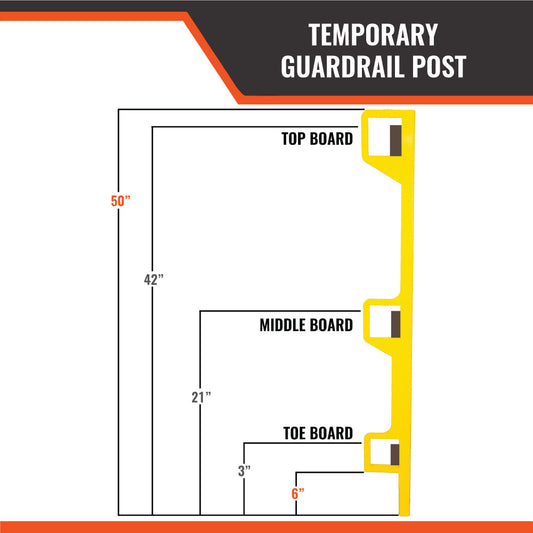
Malta Dynamics Temporary Guardrail Post
A temporary post for building guardrail at an open edge during construction. See the product page for specifications and the configurations it supports.
Wall Walker guardrail for framing
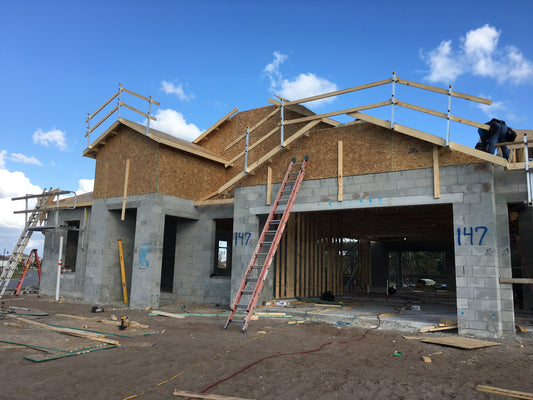
Guardrail posts, bracket pairs and the GGPB16 gable guardrail post and bracket for the Wall Walker top plate bracket scaffold and gable ends: the guardrail post, the guardrail bracket pair and the gable guardrail post and bracket.
Freestanding weighted-base guardrail, rental
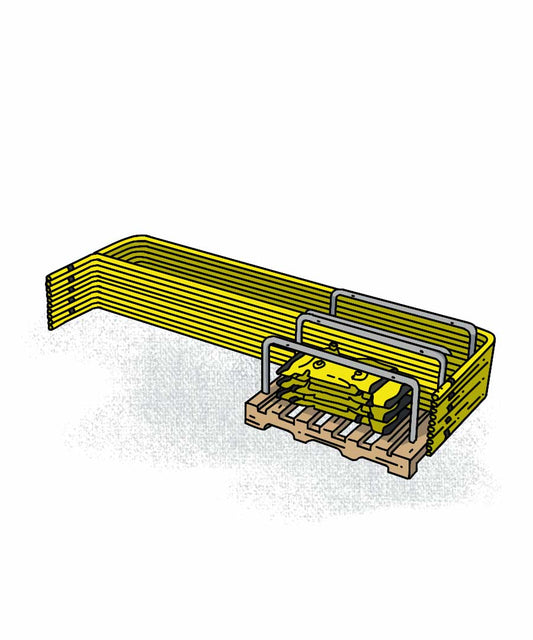
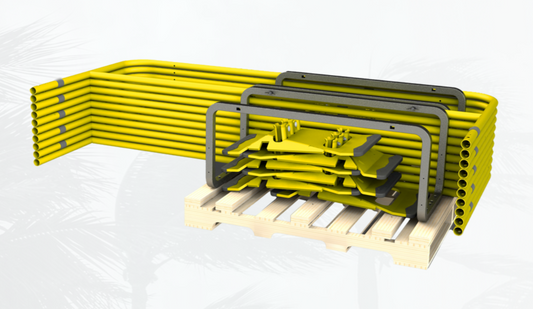
Counterweighted bases sit on the surface and hold standard rail sections with no penetration, the usual choice for flat commercial roofs with no parapet. This is on our rental fleet as the Tie Down Universal Guardrail, in 110 linear foot configurations, with rates on the rental rate sheet.
What OSHA requires of the rail itself
The top edge sits 42 inches, plus or minus 3 inches, above the walking surface, in general industry under 29 CFR 1910.29(b) and in construction under 29 CFR 1926.502(b). The system must withstand, without failure, at least 200 pounds applied downward or outward within 2 inches of the top edge, and under that downward load the top rail must not deflect below 39 inches. Midrails, screens or equivalent intermediate members are required where there is no wall or parapet at least 21 inches high. Ask for the manufacturer's test documentation for the configuration you are installing, because a rail is only compliant as set up, not as sold.
Where crews use temporary guardrails
- Rooftop perimeters and leading edges
- Roof hatches and skylights
- Framing, top plates and gable ends
- Mezzanines and elevated platforms
- Loading docks and dock edges, including the fixed edge beside a flatbed being loaded
- Floor holes, stair openings and pits
Buy or rent
Buy when you protect the same edges project after project, or when the guardrail rides with a framing scaffold. Rent freestanding rail when a flat roof job has a defined start and finish or you need extra footage for a short push. See fall protection rental and the rental rate sheet, or call 949-954-6581 and we will size the system to your edge. On houses and tract work the trigger and the acceptable methods are their own subject, worked through in fall protection in residential construction.
Temporary guardrail FAQ
How tall does an OSHA guardrail have to be?
The top edge must be 42 inches, plus or minus 3 inches, above the walking surface. The system must withstand at least 200 pounds downward or outward within 2 inches of the top edge, and under the downward load the top rail must not deflect below 39 inches.
Do I need guardrail on a flat roof?
It depends on distance from the edge and how often the work happens. Under 29 CFR 1910.28(b)(13), work closer than 6 feet from the edge of a low-slope roof requires guardrail, a net, travel restraint or fall arrest. From 6 to less than 15 feet, a designated area is allowed only for work that is both infrequent and temporary. At 15 feet or more, a designated area is allowed for any work, and infrequent, temporary work needs no fall protection, but an enforced work rule keeping people 15 feet back is always required.
Does freestanding guardrail damage the roof?
Weighted-base and clamp-mounted systems are non-penetrating, so they hold the edge without drilling the membrane or voiding a roof warranty.
Can I rent temporary guardrails?
Yes. Freestanding guardrail is on our rental fleet in 110 linear foot configurations. Call 949-954-6581 for availability.
Does OSHA prefer guardrails or personal fall arrest?
Where a guardrail is feasible, it is the stronger control. As passive protection it guards everyone on the deck without a training-dependent step, which places it above personal fall arrest in the hierarchy of controls.
What does OSHA require at a roof hatch?
A roof hatch is a hole in a walking surface, so it needs a cover, guardrail, travel restraint or personal fall arrest under 29 CFR 1910.28(b)(3). Where guardrail is used at a ladderway opening, 29 CFR 1910.29(b)(13) requires a self-closing gate or an offset. See roof hatch and ladder guardrails.